(Image source from: IANS)
Trade agreements made one after another with the European Union and the United States - one called the "greatest trade deal ever" and the other aimed at cutting the tax on Indian products to 18 percent - are expected to help the economy significantly, potentially adding US$150 billion in exports over the next ten years. These agreements will lower taxes and remove obstacles in the market, helping India's manufacturing industry, especially in textiles which will likely gain from lower taxes compared to competitors like Bangladesh and Vietnam, even though the time to put these deals into action could limit benefits. Once they are approved by the European Parliament and signed by India and the US, these deals should help decrease some trade tensions and show that economic cooperation continues, though not always evenly. At the same time, they help prevent India from being left out of global trade groups, especially given the geopolitical challenges and the tensions between the US and China.
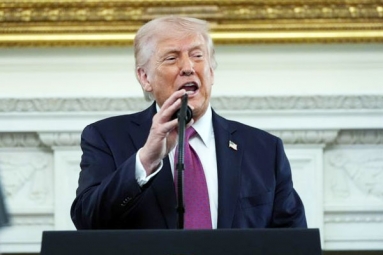
The main point to note is the new tariff rate of 18 percent on Indian imports. Indian goods faced some of the highest taxes globally after Trump set a 50 percent tariff, which included a 25 percent additional tax on buying Russian oil. This extra tax will be removed. The tariffs impacted various industries, including steel, textiles, and pharmaceuticals. For instance, steel exports to the US dropped by 40 percent after these taxes were imposed. The steel industry could gain back around US$2 billion from lower costs and improved export profits, which should lead to higher income and profits, although this is uncertain. The pharmaceutical sector is another area that could see significant benefits.
India is the largest worldwide exporter of affordable generic medications, which are essential in markets like the US, where brand-name drugs can be too expensive for lower-income groups. Generic drug manufacturers faced tariffs as high as 26 percent. If these are removed, the export potential could increase by US$10 billion. The seafood sector is another area that may benefit as exports to the US, which dropped by about 20 percent due to high tariffs of nearly 60 percent that included anti-dumping duties, begin to recover. This sector is very important for India, worth over US$850 million even after the decline. There is a lot of opportunity for growth; while US seafood exports decreased, those to China, the EU, and other regions grew by about 16 percent, reaching US$4.87 billion between April and October 2025.
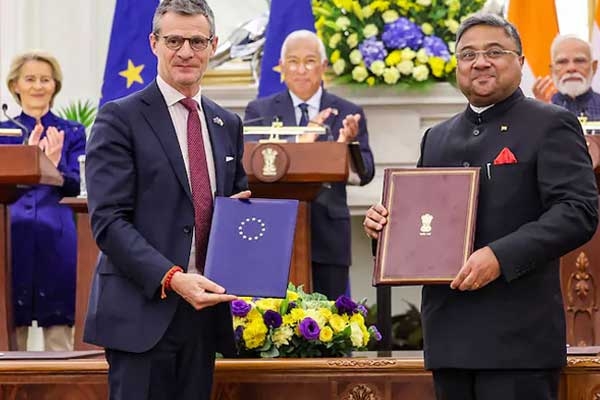
Overall, removing restrictions is anticipated to not just bring trade back to the levels it was before tariffs were imposed but also to enhance that amount, increasing from 188 billion dollars in the financial year 2023 to over 300 billion dollars soon. There are still many uncertainties—which have caused frustration among the opposition—regarding this agreement, such as when the new rates will start and when to stop purchasing oil from Russia. However, Prime Minister Narendra Modi has expressed gratitude to his close ally, President Trump. Trump also stated that this agreement involves a promise from India to purchase more than 500 billion dollars in American energy, technology, coal, and agricultural goods, yet again, there is a lack of clarity. On January 27, just one day after India marked its 77th Republic Day, leaders from Europe met with the Prime Minister in Delhi to finalize a long-delayed free trade agreement.
The trade agreement between India and the EU, which has been in progress for twenty years, is predicted to increase trade between the two by 41 to 65 percent, as per a report from the Kiel Institute for World Economy based in Germany last week, assuming that the FTA will be implemented smoothly amid increasing global trade fragmentation. The most significant point here is that there will be no taxes, meaning Brussels will charge no tariffs on 99.5 percent of Indian exports—this includes leather products and jewelry over a seven-year time frame, with some estimates suggesting it could unlock 75 billion dollars in exports and could double trade to 272 billion dollars by 2032. Other benefits for India consist of more affordable access to European car producers.
Delhi has agreed to reduce tariffs from 110 percent down to just 10 percent, but this will occur over five years to safeguard local manufacturers. India has also decreased tariffs on alcoholic drinks like wines from 150 percent to 75 percent immediately, with a commitment to eventually lower it to 20 percent. The EU indicated that tariffs on spirits will be cut to 40 percent, and they have agreed to provide financial aid of 590 million dollars over the next two years to assist India in lowering greenhouse gas emissions. Trade between India and the EU reached 136.5 billion dollars in the fiscal year ending March 2025, in comparison to 132 billion dollars in trade with the US and 128 billion dollars in trade with China.